 Menu
Menu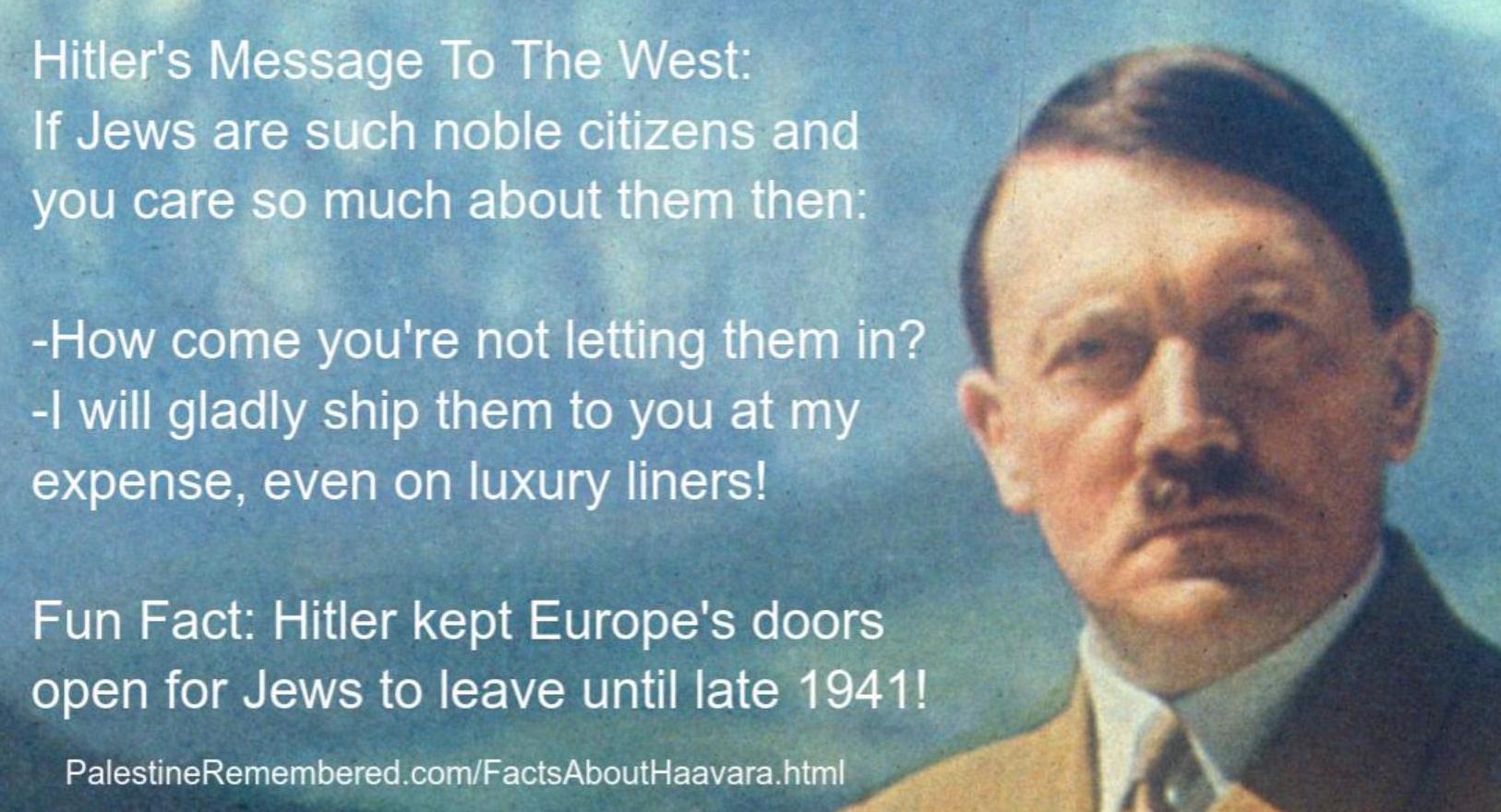 Hitler's Message To The West: If Jews are such noble citizens and you care about them, how come you're not letting them in?
 Ethnically Cleansed Palestinians on their way to Lebanon, Oct. 1948
 Fake Valor: Why Did Zionist Jews Hoist Nazis Flag on Their Ships in the 1930s?
Consequently, the act of compulsory population transfer (Ethnic Cleansing) has been accepted internationally as a war crime, and on that basis, both Serbia and Iraq were subjected to international condemnations, and U.N. resolutions were enforced by military action to stop and reverse these war crimes.
For the moment, let's assume that the above argument is nonsense to the average Israeli or Zionist. Let us analyze why the integration of Palestinian refugees into neighboring host countries is not viable for the following economic and political reasons:
Economic reasons
- It should be emphasized that 75% of the new Jewish immigrants to Israel after the 1948 war operated on looted Palestinian houses, farms, cars, trucks, banks, and infrastructure resources such as water networks, power grids, railroads, airports, wells, the telegraph network, and the schools, roads, and ports.

In other words, Israel has had the looted Palestinian capital as collateral, German compensation money for war crimes committed during World War II, and over 120 billion dollars in American taxpayers' money to help settle the new Jewish immigrants. On the other hand, Palestinian refugees and their corresponding host countries had no such good fortune. If Palestinians are to be helped to settle in someone else's country, they have to take somebody else's property, which is unfair and unjust to others. From an economic standpoint, the biggest economic boost the "Jewish State" had was the looted and stolen Palestinian properties.
-
For a second, let's assume that such repatriation is possible in the host countries and calculate the cost of such repatriation. For example, let's assume that we need to provide reasonable health care insurance (not government subsidized) for each Palestinian refugee in Jordan (which hosts close to 3 million Palestinian refugees). Let us also assume that such insurance costs $100/month per refugee. So, the total yearly cost of providing health care insurance to all refugees in Jordan is at least 3.6 billion dollars = $100 * 12 months * 3 million refugees. We have not yet analyzed the costs of providing infrastructure services, i.e., roads, water networks, power grids, education, transportation, ports, airports, etc. While contemplating these staggering numbers, remember that the Jordanian government's annual budget is slightly over 6 billion dollars, compared to 53 billion dollars for Israel.

General view of al-Maliha taken during Nakba, and in the foreground, Zionist Jews are looting Palestinian properties
While the average Jordanian citizen has some collateral (such as land, real estate, etc. ) to support his or her future well-being, the average Palestinian refugee has nothing but his or her tent as collateral, and even the tent belongs to the United Nations. Consequently, the average Palestinian's net worth (in economic terms) is almost nil, which negatively impacts tax revenues in the host countries. The huge number of refugees stifled economic growth in these host countries for several decades, since many essential services had to be diverted to help the refugees.
Ironically, the absence of a Palestinian economic base has motivated the average Palestinian to invest in intellectual capital. It's amazing how many Palestinians have lived the lives of many Jews in the past. In general, Europeans used to restrict land purchases by their Jewish citizens, which in turn motivated many Jews to invest in their intellectual capital.
-
For the moment, assume that the above economic formula is nonsense to the average Israeli or Zionist, then let's ask the following questions:
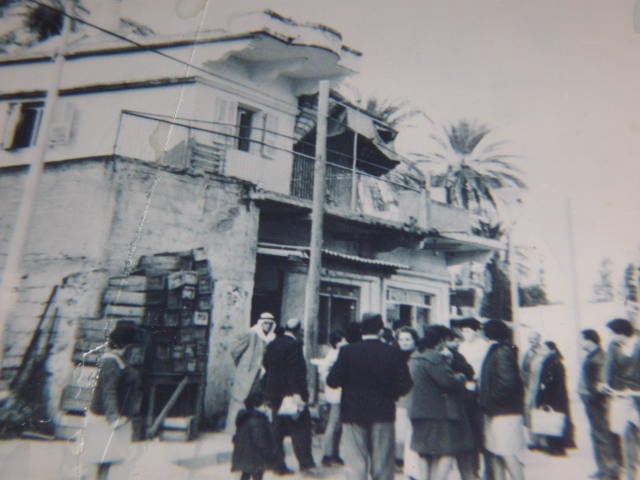
The Palestinian owner of this property has confronted Zionist Jews who looted his home in al-'Abbasiyya - Jaffa, 1967
Suppose it's easy for the host Arab countries to integrate Palestinian refugees into their economic and social structure. Why, after three decades of Israeli military occupation of the West Bank and Gaza Strip, has Israel been unable to improve the lives of the Palestinian refugees under its direct control?
If it's easy for the host countries to integrate the refugees (despite their limited resources), then surely it should be much easier for Israel to do so!
Paradoxically, many Palestinian refugees' economic situation has worsened under Israeli occupation, and if it were not for the United Nations' food rations, many refugees would have starved by now! Malnutrition among Palestinian Children in the occupied West Bank and the occupied Gaza Strip has increased by 1600% since September 2000.
- It's unfair to claim that many Arab countries did not integrate Palestinian refugees into their economic, social, and even political structures. Out of the 5.9 million Palestinian refugees, there are 3.5 million refugees who still live in refugee camps (usually known as "registered refugees"). So despite all of the above obstacles, some 2 million Palestinian refugees (almost half the number of Israeli Jews) are already integrated into the host countries' economic, political, and social structures.
Political Reasons
-
For the above economic reasons, Palestinian refugees were obliged to compete for all available resources in the host countries and continue to do so. The average Palestinian (ironically, like many Jews in the West) knows that he or she has to work twice as hard as the local worker to keep his or her job. On average, Palestinians (for economic and political reasons) are not welcomed in the host countries, and that generates anti-Palestinian feelings. For instance, take the discriminatory practices of the Lebanese government, where Palestinians are excluded from 73 job types, such as engineering, health care, and finance.

Zionist Jews enjoying their time with their kids in the looted village of Dayr al-Qasi, soon after Nakba 1949
Although this behavior is deplorable, it is a natural reaction by any state to any external threat to its resources, and this is a common experience among Jews when they emigrate to the "Jewish state". It should be noted that it is still a tense situation between Ashkenazi, Sephardi, and African Israeli Jews, and the blood of the latter was not welcomed in Israeli blood banks for a very long time.
-
It should be noted that even if the Palestinian refugees are integrated into the host countries, that won't stop Palestinians from demanding their right to return to their homes in Israel. Palestinians are extremely proud of their national identity and continuously assert their unique cultural and political differences at the earliest possible opportunity. This deep sense of nationalism is widely shared among Palestinians, especially among the affluent families, who are already integrated in Western and Arab societies, i.e., in the US, Europe, Canada, ... etc. Many of them still marry from the same indigenous localities and maintain their unique dresses, folklore, and accents.
 Adolf Eichmann & company coined a special Gold Medallion in honor of the Nazis' relationship with Zionists! Do you have any ideas why he visited Palestine in 1937?
The major obstacle that many Israelis and Zionists have in their dealings with Palestinians is that they think that 8.5 million Palestinians have no national rights, such as the right of self-determination. Paradoxically, they believe that 4.5 million Jews in Israel have the right to self-determination! From the start, the struggle between Zionism and the Palestinian people was a struggle between two distinct and conflicting nationalistic movements.
-
Most, if not all, host countries are hesitant to grant political rights (such as the right to vote) to non-citizens, especially if the "newcomers" could overnight change the political landscape. This political problem occurred in Jordan, Lebanon, and Syria soon after the 1948 war. For example, Jordan's citizens became (overnight) a minority in their own country. To ask the average Jordanian to accept this situation permanently, without anything in return, is to create a "political time bomb." Unfortunately, this "political time bomb" has already exploded in Jordan and Lebanon, and its aftershocks are still felt today.
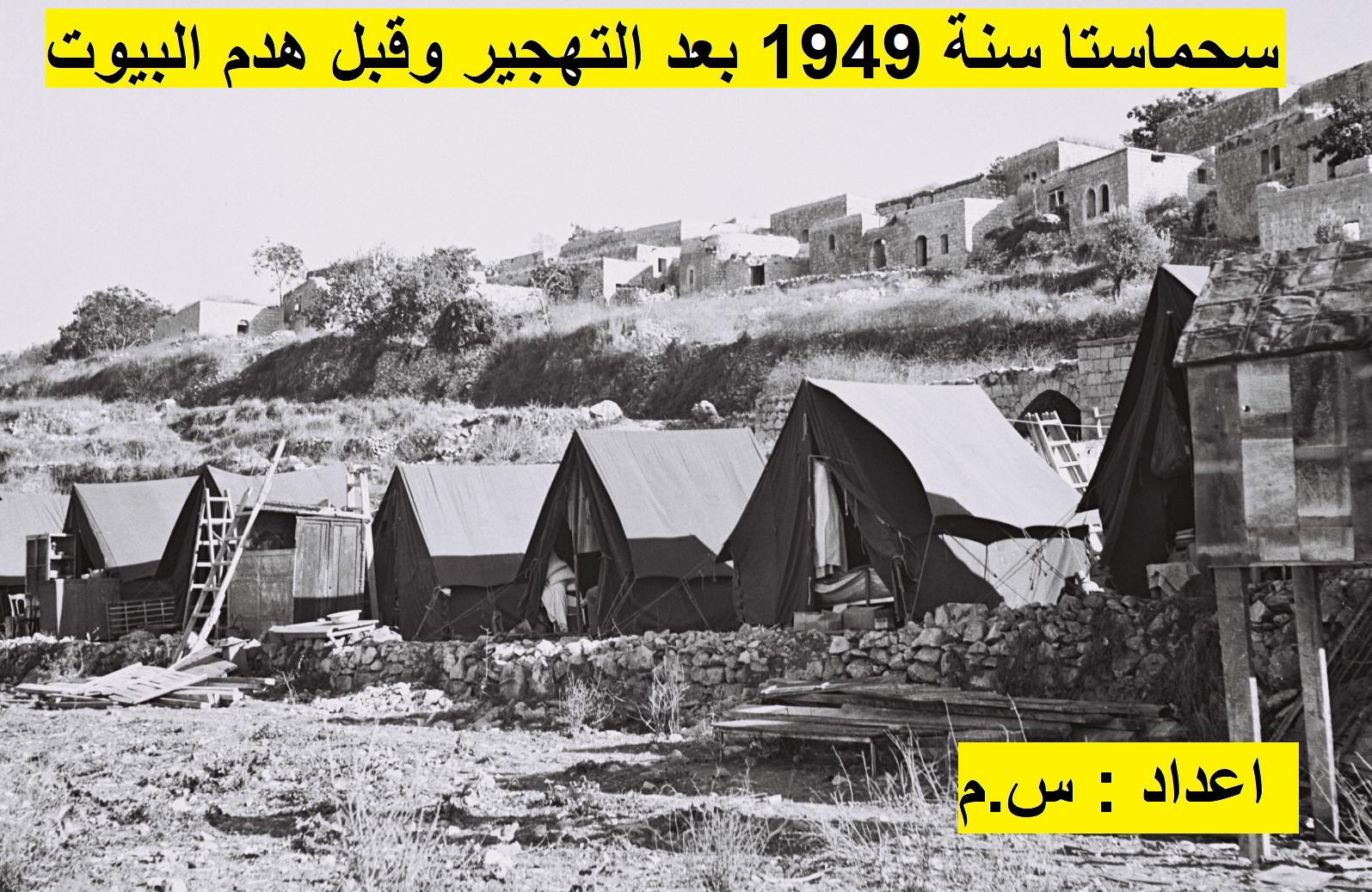
Zionist Jews camping in tents while the looted Palestinian homes (in the village of Suhmata - Acre) are being renovated soon after Nakba, 1949


 Over 700 Oral History interviews (including 3,500+ hours of recording) can be viewed online.
Post Your Comment
*It should be NOTED that your email address won't be shared, and all communications between members will be routed via the website's mail server.
Why is your rebuttal completely unreasonable? Because the people of the Third World are very sensitive to it. In the history of the Third World, too many ethnic groups have encountered too many disasters that should not have been borne. During the world war ??(Introductions will be put in my another comment)the suffering of the Koreans is not caused by the Chinese, so is it reasonable for Koreans like Park Chung hee to do so?In the same way, the subjugation and exclusion of Jews were a problem in Rome and later Europe.It certainly makes no sense for the Palestinian people to suffer from all this.Moreover, regarding Suicide Bombers, it is precisely the Jews who first invented Suicide Bombers. Lehi and Ilgon are notorious terrorist organizations. They
first invented Suicide Bombers to attack Arabs. According to your logic, Arabs at that time were more qualified to demand that Jews be kept out of the
door and not allowed to approach themselves. So if you think your logic is correct, why should Jews establish a state?
If what you have presented is a VALID reason to dispossess and throw out Palestinians out of their homes, farms & businesses, the same logic could be applied for dispossession and throwing out NY City of its people; Americans have by far more lands and resources than Arabs. On top of that, Jews turned NYC into a financial world center; therefore that would make more sense. What you fail to understand, that if you have a homeland; it is never for sale. The fact a homeland is for sale by somebody like you, says a lot about you! Friedrich Nietzsche called Salve Culture!
Dear Susan, you cannot turn Palestinians to a Messiah for all the sins the West piled onto their Jewish citizens. Palestinians were not the ones who took turns gang rapping their Jewish citizens; it was Europeans. Even American turned them away.
Click below if you wish to educate yourself how American we humans dealing with wealthy Jewish refugees
https://en.wikipedia.org/wiki/MS_St._Louis
Palestinians will never accept being crossed for what the West have done; therefore plz dump your salve morality somewhere else. This is the land of the free.. and the home of the brave. It took us 200 years to cleanse the "promise land" from the crusaders; we can wait a 1000 years.
If fighting back for our looted homes, farms and business makes us terrorists and antisemitic, let it be Susan. Actually weaponizing antisemitism against us Palestinians...is itself antisemitism; however, this is the language of the free... slaves don't get it.
sincerely,
Abu al-Sous (Salah Mansour)
Los Angeles, CA - USA
https://www.PalestineRemembered.com
https://www.PalestineRemembered.com/ZionistFAQ.html
Why would other Arab countries NOT welcome Palestinian Arab muslims into their countries? This seems the epitome of selfishness to me. And Israelis had no choice but to build a wall because 1000 of their citizens were killed by Palestinian suicide bombers in a ten year period.
Some of these issues are no brainers except to antisemitic partisan haters.
As I see it, the lack of integration of Palestinians into Arab countries is causing unnecessary poverty and suffering for the sake of politics. Allowing Palestinians the opportunity to contribute to the societies they live in won't absolve Israel of its wrongdoing any more than the US taking in immigrants fleeing places like Cuba and the Soviet Union absolved Communist regimes of their abuses.
If the subject hasn't been posted on here already, I would like to see an article responding to the claim that "the Palestinians' refugee status was made unique (their descendants qualify for refugee status unlike other groups) for political means against Israel.