 Menu
Menu
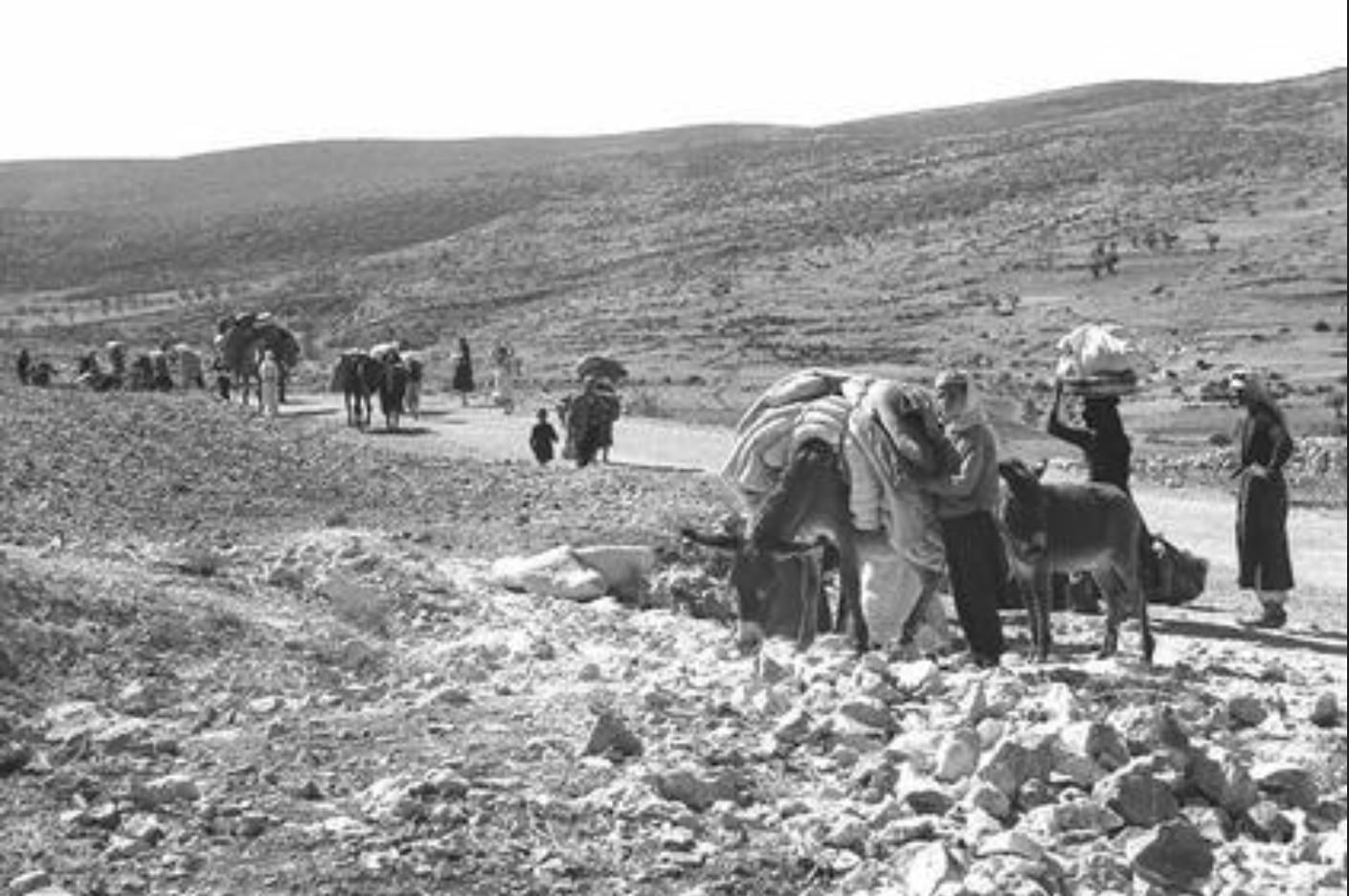 Ethnically Cleansed Palestinians On The Run-Fleeing for their lives to Lebanon, Oct. 1948
The origins of the Palestine problem as an international issue, however, lie in events occurring towards the end of the First World War. These events led to a League of Nations decision to place Palestine under the administration of Great Britain as the Mandatory Power under the Mandates System adopted by the League. In principle, the Mandate was meant to be in the nature of a transitory phase until Palestine attained the status of a fully independent nation, a status provisionally recognized in the League's Covenant, but in fact the Mandate's historical evolution did not result in the emergence of Palestine as an independent nation.
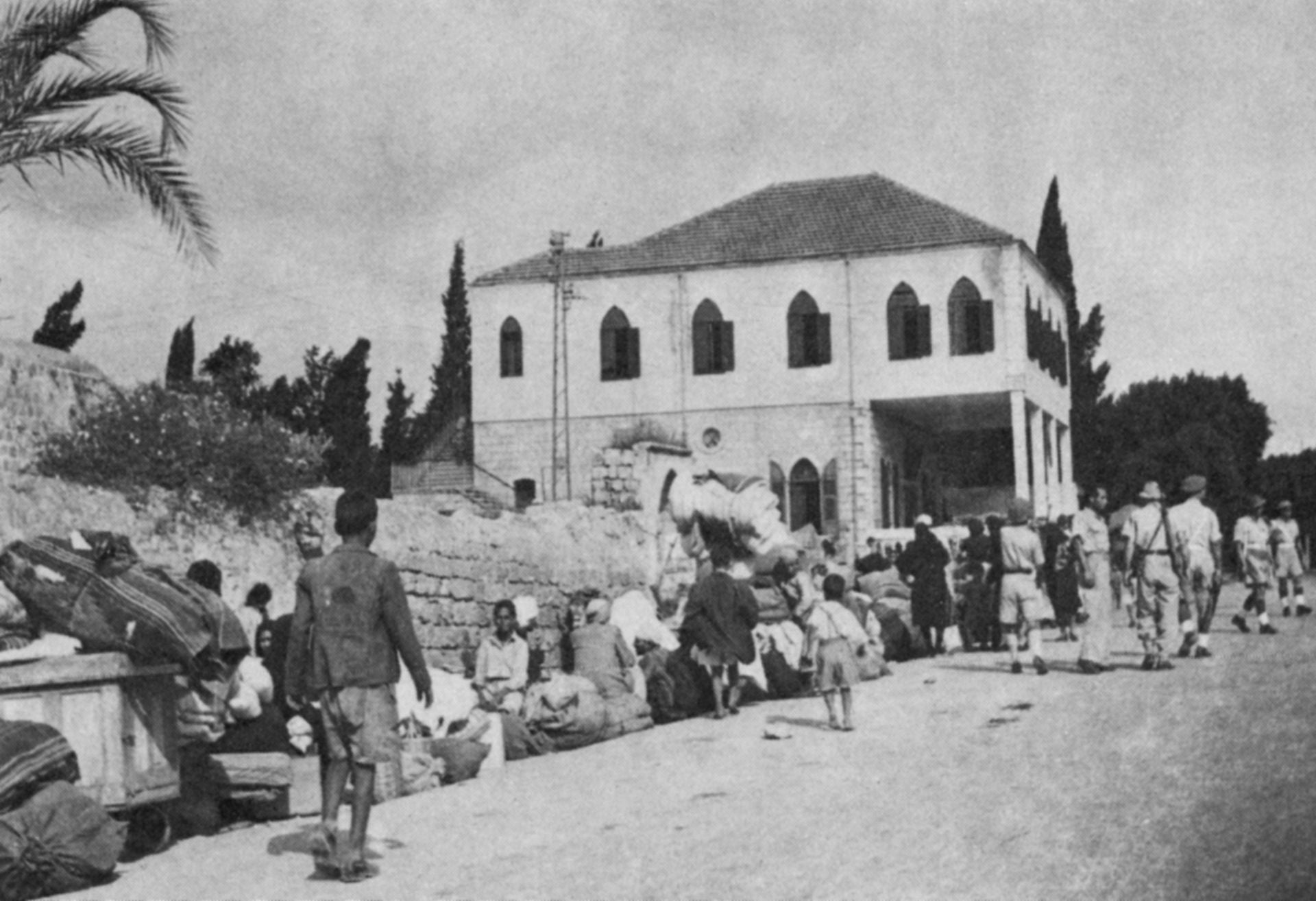 Residence of al-Ramla being ethnically cleansed based on the orders from Rabin; July 1948
During the period of the Mandate, the Zionist Organization worked to secure the establishment of a Jewish national home in Palestine. The indigenous people of Palestine, whose forefathers had inhabited the land for virtually the two preceding millennia felt this design to be a violation of their natural and inalienable rights. They also viewed it as an infringement of assurances of independence given by the Allied Powers to Arab leaders in return for their support during the war. The result was mounting resistance to the Mandate by Palestinian Arabs, followed by resort to violence by the Jewish community as the Second World War drew to a close.
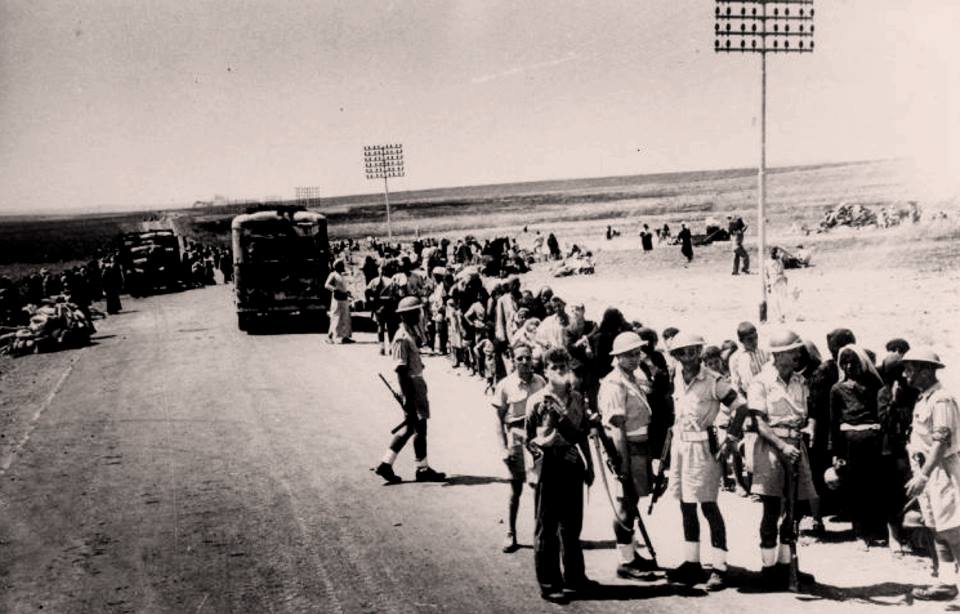 Palestinian are being ethnically cleansed out of al-Ramla & al-Lydd in July 1948 by Zionists Jewish forces as you see based on direct orders from Ben-Gurion, and executed by Yitzhak Rabin
The Palestine problem quickly widened into the Middle East dispute between the Arab States and Israel. From 1948 there have been wars and destruction, forcing millions of Palestinians into exile, and engaging the United Nations in a continuing search for a solution to a problem which came to possess the potential of a major source of danger for world peace.
In the course of this search, a large majority of States Members of the United Nations have recognized that the Palestine issue continues to lie at the heart of the Middle East problem, the most serious threat to peace with which the United Nations must contend. Recognition is spreading in world opinion that the Palestinian people must be assured its inherent inalienable right of national self-determination for peace to be restored.
In 1947 the United Nations accepted the responsibility of finding a just solution for the Palestine issue, and still grapples with this task today. Decades of strife and politico-legal arguments have clouded the basic issues and have obscured the origins and evolution of the Palestine problem, which this study attempts to clarify.
CLICK HERE for the official UN's version of this booklet.


 Over 700 Oral History interviews (including 3,500+ hours of recording) can be viewed online.
Post Your Comment
*It should be NOTED that your email address won't be shared, and all communications between members will be routed via the website's mail server.