| PalestineRemembered | About Us | Oral History | العربية | |
 Menu Menu |
Pictures | Zionist FAQs | Haavara | Maps |
| Search |
| Camps |
| Districts |
| Acre |
| Baysan |
| Beersheba |
| Bethlehem |
| Gaza |
| Haifa |
| Hebron |
| Jaffa |
| Jericho |
| Jerusalem |
| Jinin |
| Nablus |
| Nazareth |
| Ramallah |
| al-Ramla |
| Safad |
| Tiberias |
| Tulkarm |
| Donate |
| Contact |
| Profile |
| Videos |
Welcome To Fardisya - فرديسيا (פרדיסיא)
|
District of Tulkarm
Ethnically cleansed days ago |
العربية Google Earth |
 |
Gallery (2) |
- Statistics & Facts
-
Before & After

- Satellite View
- Articles 1
- Pictures 2
- Members
- All That Remains
- Wikipedia
- Videos 1
- Guest Book 2
- Links
| Statistic & Fact | Value | ||||||||||||||
| Occupation Date | April 1, 1948 | ||||||||||||||
| Distance From District | 2.5 (km) South of Tulkarm | ||||||||||||||
| Elevation | 80 (meters) | ||||||||||||||
| Before & After Nakba, Click Map For Details |
|||||||||||||||

|
|||||||||||||||
| Map Location | See location #13 on the map View from satellite |
||||||||||||||
| Military Operation | Coastal Clearing | ||||||||||||||
| Exodus Cause | Expulsion by Zionist troops | ||||||||||||||
| Village Temains | Fardisya was mostly destroyed with the exception of one deserted house. If that house is yours, you're more than welcome to claim it back!, it is just matter of time. | ||||||||||||||
| Ethnically Cleansing | Fardisya inhabitants were completely ethnically cleansed. | ||||||||||||||
| Pre-Nakba Land Ownership |
**Town Lands' Demarcation Maps |
||||||||||||||
| Land Usage As of 1945 |
|
||||||||||||||
| Population |
|
||||||||||||||
| Number of Houses |
|
||||||||||||||
| Near By Towns |
|||||||||||||||
|
|
|||||||||||||||
| Town's Name Through History | The Crusades referred to Fardisya by Phardesi. | ||||||||||||||
| Places of Warship | Fardisya had one mosque named after a local religious teacher known by al-Shaykh Musa. | ||||||||||||||
| Water Supply | A spring located north of Fardisya provided it with its drinking water needs. | ||||||||||||||
| Exculsive Jewish Colonies That Usurped Village Lands |
The settlement of Sha'ar Efrayim occupied some Fardisya's lands. | ||||||||||||||
| Featured Video | |||||||||||||||
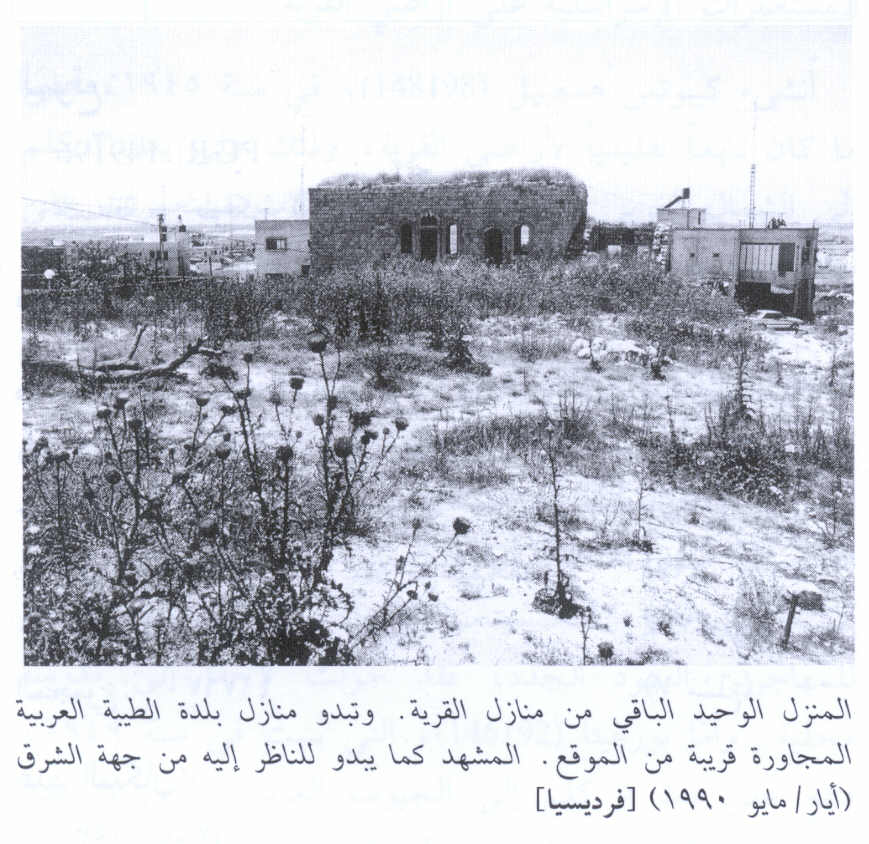
Village Before NakbaThe village stood on the northwestern slope of a hill on the coastal plain. One could see the Mediterranean, to the west, and Tulkarm, to the north, from the village. It was located north of the town of al-Tayyiba, and was linked to this town by a secondary road. A side road also linked Fardisya to the Tulkarm-Qalqilya highway, which ran west of the village. The village was identified with a Crusader site known as Phardesi. In 1596, Fardisya was a village in the nahiya of Bani Sa'b (liwa' of Nablus) with a population of eighty-three. It paid taxes on a number of crops, including wheat, barley, and olives, as well as on other types of produce, such as goats and beehives. In the late nineteenth century, Fardisya was a small village near the edge of a group of hills. The village houses were built along the roads to the west and south to form a triangle. A mosque named after a religious teacher, Shaykh Musa, was located on the western outskirts of the village. A spring to the north provided the villagers with drinking water. Wells were also found in the vicinity of the village. In 1944/45 a total of 384 dunums was allocated to cereals; 187 dunums were irrigated or used for orchards, of which 150 dunums were planted with olive trees.Village Occupation and Ethnic CleaningThe villages in this section of the coast came under increasing pressure in April and early May 1948 from Haganah and Irgun attacks and expulsion orders. Although the events that occurred at Fardisya (and a cluster of nearby villages) are not clearly known, it is likely that its inhabitants were displaced some time before or during early April at the latest. The village's location in an area of heavy Jewish settlement would have made it prone to attacks and other forms of intimidation. By mid-May the Haganah had fulfilled its aim of 'clearing' all Arab inhabitants from the coastal plain between Tel Aviv and Zikhron Ya'aqov, a settlement south of HaifaZionists Colonies on Village LandsThere are no Israeli settlements on village land. Sha'ar Efrayim, built in 1953 to the north of the site on land that had traditionally belonged to the village of Far'un, is close to the village lands of Fardisya.Village TodayWith one exception, all of the houses have been levelled, and rubble is scattered throughout the site, especially around the one house that has not been destroyed. This house is rectangular and has an eastern arched entrance and arched windows. One of its rooms is partly destroyed; its ceiling is gone. On the western side, one can see a tomb with a headstone that bears a Qur'anic inscription. Northwest of this tomb, the village cemetery is visible. Houses from the nearby Arab town of al-Tayyiba now stand close to the site of Fardisya.SourceDr. Walid al-Khalidi, 1992: All That Remains. |
|||||||||||||||
| Related Maps | Town Lands' Demarcation Maps خرائط للقضاء توضح حدود القرى والاودية Town's map on MapQuest View from satellite Help us map this town at WikiMapia |
||||||||||||||
| Related Links | Wikipedia's Page Google Search Google For Images Google For Videos |
||||||||||||||
| More Information | في كتاب كي لا ننسى في كتاب بلادنا فلسطين المزيد من موقع هوية |
||||||||||||||
- The single remaining village house, 1990
Scanned from "All That Remains" by Dr. Walid Khalidi - خارطة تُظهِر الحدود والطرق بأنواعها والأماكن المقدسة والطبيعة الطوبغرافية من تلال وسهول ومنحدرات والتشكيلة الطبيعية للأرض وأنواع المزروعات. نُشرت الخريطة فترة الانتداب البريطاني، تم إضافة تعديلات عليها من قِبَل خدمة الخرائط والصور التابعة للقوات العسكرية الاسرائيلية فترة الأربعينيات.

Want to browse more? 80,000 pictures were grouped in these gallaries:
| Display Name | Clan/Hamolah | Country of Residence |
No links have been shared yet, be free to the first to share the first link.
 Fake Valor: Why Did Zionist Jews Hoist Nazis Flag on Their Ships in the 1930s?
What is new?
-
Facts About Oct. 7th Gaza Raid
-
Remined Us Please: Who Did Rape Whom? Was it Palestinians who raped Israelis? Or, was the other way around? You'll be the judge
-
When Prof. Edward Said was invited to debate Bibi Netanyahu in the 1980s, watch what happened!
-
Ezra Klein of the NY Times on the "Jewish Race".
-
Abusing Blood Libel!
-
How and why Israeli Jewry has become the most hated cult?
-
Did Israeli Soldiers Activate The Hannibal Direective On Oct. 7th? You Be The Judge
-
Zionist FAQ: Isn't it true that Palestinians don't want peace? Palestinians never accepted the two-state solution
- Facts about Haavara (Transfer) Agreement between Ben-Gurion & Hitler
-
Haavara FAQs: Why Did Zionist Jews Hoist Nazis' Flags on Their Ships in the 1930s?
- Haavara FAQs: When Chaim Weizmann met FDR in mid-1943, why was he silent about rescuing European Jewry?
-
Dear ChatGPT: How did Palestinians resist Napoleon's invasion of their country in 1799?
-
Dear ChatGPT: Gaza had a vibrant Jewish community in the mid-17th century. What happened to them?
-
Dear ChatGPT: Why did the Jewish Agency suppress news of the Holocaust during WWII?
-
Video Playlist: Jews share their DNA tests to end the conflict for good.
-
A Tale of Two Conflicts: Examining the Definition of Genocide
-
Prof. Abraham Polak And The Suppressed History of the Khazars and European Jewry
-
How Ronald Reagan would have framed the genocide in Gaza if he were still alive?
-
Haavara FAQs: Let us do the math: how many German Jews did The Haavara Agreement save?
-
Zionist FAQs: The Hebron Massacre of 1929, "clearly proves" that Palestinians are antisemitic, how could you deny it?
-
Zionist FAQs: Why Anti-Zionist Is Not Antisemitism?
-
Zionist FAQs: Isn't it true that the KGB created Palestinian Nationalism in the early 1960s?
- Zionist FAQs: Muslims are killing Muslims all the time; why are Israeli Jews being singled out in the media?
- Zionist FAQs: How is Israel an apartheid state when 20% of its citizens are Arabs who enjoy full rights?
-
Haavara FAQs: Why Did Dorothy Thompson Flip From A Zionist Advocate to A Silenced Dissenter?
-
Haavara FAQs: Analysis of Herzl's Uganda Scheme and how it could have saved millions of Jews.
-
Haavara FAQs: Why did Hayim Greenberg describe American Jewry as "morally bankrupt" in early 1943?
-
Haavara FAQs: What if the Evian Conference was a resounding success? What would have been the impact of saving European Jewry on Zionism?
- Haavara FAQs: What if the six million were saved, how that would have impacted the Zionist project?
-
Haavara FAQs: How did Zionist leaders react when Europe's Jews lingered in the DP camps after WWII ended?
-
Why does the American Jewish community repeat lies that David Ben-Gurion had debunked before he died?
-
Who has the power to rename the Tatar/Khazar Gene Marker to Jewish IV?
-
Zionist FAQs: Why won't Egypt, Syria, and Jordan take their people back? Jews are indigenous to Palestine, and Arabs immigrated after Jews developed the country. Arabs should leave.
-
Haavara FAQs: Did Hitler and the Nazis conflate between Judaism and Zionist? If that wasn't case, then why?
-
Haavara FAQs: Winston Churchill and antisemitism, a collection of articles written Churchill.
-
Haavara FAQs: Broken by country, how many Jews survived vs. killed during the Holocaust?
-
Haavara FAQs: Why did European Jews vote with their feet and to immigrated to the Americas, not Palestine, after WWII?
-
Watch this American Jewish Girl describing Israeli Jews' cognitive dissonance like no other in under two minutes
-
Haavara FAQs: When the Nazis went out of their way to hide the Holocaust, Israeli Jews did the exact opposite by broadcasting their genocide of Gazans. But why?
-
Haavara FAQs: How Zionist Jews went out of their to show their appreciation to Nazism and Fascism?
- Haavara FAQs: Why Zionist leaders were against bombing the death camps & the Railroads leading to them?
-
Haavara FAQs: Hitler's message to the British and American people: If Jews are such noble citizens and you care about them, how come you're not letting them in? I will gladly ship them to you at my expense, even on luxury liners!
-
A shortlist of Zionist and Israeli false flag operations in the name Jews.
-
The Most Moral Army
- The Land of Kapos (Israel): Where the brave are boycotted and Kapos walk free.
- Why did early Zionists often named their communal enterprises "colonial"?
- Zionist Relations with Nazi Germany by Faris Glubb
-
Two NY Times advertisements by Zionists in the early 1943 that exposes Zionists' treason at the height of the calamity
- Facts Not Lies about the Palestinian-Israeli Conflict.
- Site's pictures have been categorized
- Campgain Against Lice
- A Survey of Palestine, the official source about Palestine before Nakba produced by the British Mandate; over 1200 pages.
- Satellite View & Google Earth: Over 6,000 placemarks identifying all destroyed towns, W. Bank & Gaza Strip Towns, & refugee camps.
- PalestineRemembered.com and its Nakba Oral History Project were featured on al-Jazeera Satellite TV.
- Nakba Oral History Video Podcast:
 Over 700 Oral History interviews (including 3,500+ hours of recording) can be viewed online.
 - Palestine Village Statistics Project
- Gaza Jail Break
- النسخة العربية للموقع الان متوفرة
- Videos: Documenting the destroyed villages in video: Tracing all that remains since Nakba.
- Videos: Responding to Zionist Propaganda
- Interview: The ethnic cleansing of Palestine: George Galloway interviews Israeli Historian Ilan Pappe.
- For Palestinians, memory matters. It provides a blueprint for their future By George Bisharat.
- Zionist FAQ now available in Hebrew שאלות שציונים שואלים, עכשיו בעברית
- Video: The Stephen Walt and John Mearsheimer report on the influence of the Israel Lobby on U.S. Foreign Policy
- The Palestinian-Israeli conflict for beginners
